Miraculin as a Natural Flavor Modifier Ingredient: What Product Developers Need to Know
Explore miraculin as a natural flavor modifier ingredient — technical overview, available forms, stability factors, and key considerations for product developers.
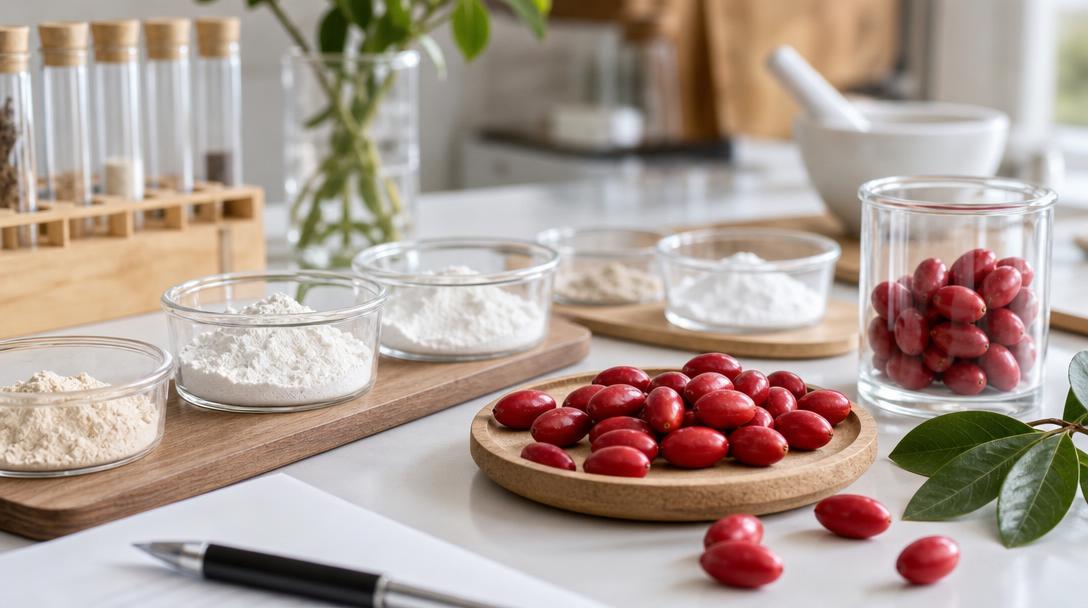
If you work in food and beverage product development, you've probably spent a fair amount of time hunting for ingredients that can do more with less — less sugar, less sourness, less of whatever your formula has too much of. Miraculin is one ingredient worth understanding, not because it's a magic fix, but because it works in a genuinely unusual way that opens up creative possibilities most flavor modifiers simply don't offer.
What Miraculin Actually Is
Miraculin is a glycoprotein naturally occurring in the fruit of Synsepalum dulcificum, commonly known as the miracle berry. What makes it technically fascinating is its mechanism: miraculin binds to sweet taste receptors on the tongue and, at neutral pH, sits largely inactive. When the oral environment becomes acidic — say, from a sour food or drink — miraculin changes shape slightly and activates those sweet receptors, causing sour flavors to be perceived as sweet or significantly less sharp.
This isn't a masking effect in the traditional sense, and it's not adding sweetness through caloric content. It's a taste-receptor-level interaction. For product developers, that distinction matters quite a bit. You're not blending in a sweetener; you're potentially modifying how a consumer's palate interprets acidity in the first place.
Miraculin is not currently approved as a food additive in the United States — that's a regulatory reality any serious product team needs to keep front of mind. Regulatory status varies by market, and due diligence on local approvals is a non-negotiable first step before any commercial application is considered.
Forms Available for Ingredient Exploration
For teams doing early-stage exploration, miraculin is generally available in a few practical forms derived from the fruit itself.
Miracle berry powder is one of the most versatile formats for formulation research. The fruit pulp is processed and dried into a concentrated powder that retains miraculin activity. Because it's a powder, it's relatively easy to incorporate into prototype batches, measure consistently, and store. It can be blended into dry mixes, encapsulated, or dissolved for liquid applications — though the last option requires careful attention to pH stability, which we'll address shortly.
Dried miracle berry in whole or cut fruit form is less refined but useful for concept testing and sensory panels. It preserves the natural fruit matrix, which some researchers believe helps maintain bioactivity, and it gives product teams a direct, low-processing way to evaluate the ingredient before committing to more refined forms.
Miracle berry tablets — typically a compressed format using the fruit pulp or powder — are already a consumer-facing product, which means they've demonstrated real-world shelf stability and sensory performance. For product developers, tablets can serve as a useful benchmark when evaluating powder activity levels, since the tablet format has an established sensory profile that's easy to test against.
Stability: The Most Important Technical Variable
Here's where many early-stage projects run into trouble. Miraculin is a protein, and like most proteins, it has meaningful sensitivity to heat and pH extremes. Understanding these limitations early will save product teams significant time.
Heat sensitivity is a key constraint. Miraculin loses activity when exposed to high temperatures, which means any processing step involving significant heat — pasteurization, hot-fill, extrusion, baking — is likely to reduce or eliminate its flavor-modifying effect. This doesn't necessarily rule out all processed applications, but it does mean the ingredient is better suited to cold-process or post-process addition strategies.
pH stability is equally important. Miraculin is most stable in a mildly acidic to neutral pH range. Very low pH environments — think citric-acid-heavy beverages or vinegar-based products — can denature the protein over time, reducing its activity before it ever reaches the consumer's tongue. This is somewhat ironic, given that acidic applications are exactly where miraculin's sweet-perception effect is most pronounced. Formulation work in this space often involves finding that balance: enough acidity to trigger the effect, but managed carefully enough to preserve the protein through shelf life.
Water activity and storage conditions also play a role. Powder formats benefit from low-humidity storage, and all forms should be kept away from prolonged heat exposure during warehousing and transit.
What Product Teams Should Realistically Expect
Miraculin is genuinely interesting, but it's not a drop-in solution. Teams approaching it with realistic expectations will get further faster.
The ingredient works best in applications where consumers experience it at or near the point of consumption — not after weeks of sitting in an acidic liquid matrix. Dry mixes, functional confections, and formats where the ingredient is activated at consumption (rather than during processing) are typically more viable starting points.
Sensory evaluation needs to be designed carefully. The effect is tongue-level and time-dependent — it doesn't last indefinitely and its intensity can vary based on individual taster physiology, the specific acid source, and miraculin concentration. This means sensory panels need standardized protocols to generate consistent, meaningful data.
Sourcing quality also matters more than with many commoditized ingredients. Because miraculin activity is protein-based, the condition and handling of source material directly affects what you're working with. Working with a supplier who understands bioactivity — not just commodity fruit supply — is worth prioritizing.
Why It's Worth Exploring Now
The food industry's ongoing interest in reducing added sugars, replacing synthetic flavor modifiers, and finding plant-derived solutions to formulation challenges makes miraculin a timely ingredient to understand, even if its path to commercial application involves real complexity. Consumer interest in novel, natural experiences is also growing, and miracle berry has a genuinely compelling story that resonates with curious, health-aware audiences.
For product developers and R&D teams who want to stay ahead of ingredient trends, investing time now in understanding miraculin's properties — before it becomes a crowded space — is a reasonable strategic move.
---
Frequently Asked Questions
Q: Can miraculin be used in beverages, or is it limited to solid formats?
A: Liquid applications are technically possible, but they require careful formulation work. The biggest challenge is maintaining miraculin's protein integrity in acidic beverage matrices over shelf life. Cold-process production and careful pH management are generally necessary. Many product teams start with solid or dry formats to establish baseline performance before attempting liquid applications.
Q: Does miracle berry powder retain the same flavor-modifying activity as fresh fruit?
A: Well-produced miracle berry powder can retain meaningful miraculin activity, though activity levels can vary depending on processing method, temperature exposure during drying, and storage conditions. When sourcing powder for formulation work, it's worth requesting information from suppliers about how bioactivity is measured and maintained through their process.
Q: Where does miraculin currently stand from a regulatory perspective?
A: Regulatory status varies significantly by market. In some regions, miracle berry and its derivatives are sold as food or food supplements without issue; in others, approval pathways for novel food ingredients apply. Product developers should consult with regulatory affairs specialists familiar with their target markets before moving toward commercial product development.
Interested in miracle berry products, wholesale, or OEM cooperation? Contact Sen Yuh Farm to learn more.
Contact Sen Yuh Farm